
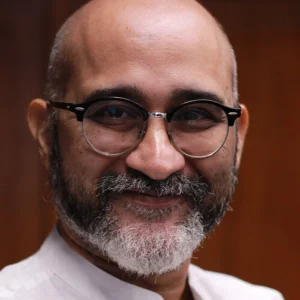
My Journey in Global Mental Health and Addiction Research
EARLY LIFE, EDUCATION & PURPOSE
I am Abhijit Nadkarni, a researcher, psychiatrist, and academic working at the intersection of global mental health and addiction science. My journey into this field has been shaped by a deep curiosity about human behavior, especially how social environments influence mental health outcomes.
From early in my career, I was drawn toward understanding how mental health systems operate in low-resource settings. India, with its immense diversity and complex healthcare landscape, provided a powerful context for this exploration. I quickly realized that millions of people lacked access to even the most basic mental health support, particularly in areas related to addiction.
This realization became the foundation of my professional mission: to develop scalable, culturally appropriate interventions that can bridge the treatment gap.
Over time, I pursued academic training that allowed me to combine psychiatry, public health, and implementation science. My work eventually led me to collaborate with global institutions, including the London School of Hygiene & Tropical Medicine, where I currently contribute to research in population health.
At the same time, I remain deeply connected to India through my work with Sangath, a leading mental health research organization based in Goa. Here, I serve as Co-Director of the Addictions Research Group, focusing on real-world solutions for substance use disorders.
MY PROFESSIONAL AFFILIATIONS
| Institution | Professional Role | Focus Area | Official Link |
|---|---|---|---|
| London School of Hygiene & Tropical Medicine | Professor / Researcher | Global Mental Health & Policy | LSHTM Profile |
| Sangath, Goa | Co-Director (Addictions Group) | Addiction & Community Interventions | Sangath India |
| South London & Maudsley NHS | Honorary Consultant Psychiatrist | Clinical Addiction Psychiatry | NHS Trust |
My career has evolved gradually through a combination of clinical practice, academic research, and international collaboration. From my early work in psychiatry in India to leading global mental health initiatives, each stage has contributed to shaping my perspective on addiction and public health. The timeline below illustrates key milestones in my professional growth, highlighting the progression from local clinical work to global research leadership.
CAREER GROWTH TIMELINE
*Professional development milestones across clinical and research sectors.
RESEARCH, ADDICTION & GLOBAL IMPACT
My work has consistently focused on understanding addiction—not only as a clinical condition but as a social and public health challenge. In India, addiction is often misunderstood, stigmatized, and under-treated. This is particularly true for alcohol use disorders, which remain one of the most significant contributors to mental health burden.
Through my research, I have worked on developing evidence-based interventions that are both effective and scalable. For example, I have contributed to structured psychological treatments such as the Counselling for Alcohol Problems (CAP) program, designed specifically for low-resource settings.
I have also explored innovative approaches, including mobile-based interventions and text messaging support systems, which can extend care to populations that otherwise remain unreachable.
In addition to alcohol-related research, my work includes broader studies on substance use, adolescent behavior, and public health policy. These efforts are part of a larger goal: to create systems that do not just treat individuals, but transform communities.
SELECTED PUBLICATIONS
| Year | Research Title | Focus Area | Source |
|---|---|---|---|
| 2024 | Tobacco Cessation Interventions | Public Health | PMC Full |
| 2023 | Text Messaging for Tobacco Cessation | Digital Health | PMC Full |
| 2022 | Alcohol Use Among Adolescents | Epidemiology | PMC Full |
| 2024 | Mobile Intervention for Drinking | Behavioral Sci | PMC Full |
My research spans multiple domains within mental health and addiction science, each contributing to a broader understanding of public health challenges in India and beyond. From clinical addiction treatment to digital health innovation and community-based interventions, these areas reflect both the diversity and impact of my work. The chart below highlights the key research domains and their relative contribution to my overall academic and clinical efforts.
RESEARCH IMPACT AREAS
*Relative distribution of professional engagement across healthcare sectors.
VISION, GLOBAL COLLABORATION & FUTURE
As I reflect on my journey, I see my work as part of a larger global movement—one that seeks to democratize access to mental healthcare. Too often, mental health services are concentrated in urban centers, leaving rural and underserved populations without support.
Through collaborations with international researchers and institutions, I have worked to build scalable models that can be implemented across different countries and cultural contexts.
One of the most important lessons I have learned is that effective mental healthcare must be culturally grounded. Interventions developed in Western contexts cannot simply be transferred to countries like India without adaptation. This is why much of my work focuses on community-based solutions.
I have also been involved in major initiatives aimed at understanding youth mental health, reducing stigma, and improving access to care. These efforts are essential for building resilient societies in the future.
KEY PROJECTS & INITIATIVES
| Project Name | Short Description | Focus | Reference |
|---|---|---|---|
| Being India | Youth mental health initiative | Adolescents | Sangath |
| IMPRESS | Depression treatment gap | Public Health | LSHTM |
| MADAD | Community-based therapy | Anxiety | Sangath |
| CAP | Alcohol counseling program | Addiction | UoB Bath |
FINAL THOUGHTS
My work continues to evolve, but the core mission remains unchanged: to make mental healthcare accessible, equitable, and effective for everyone, regardless of where they live.
I believe that the future of mental health lies in integration—bringing together research, technology, and community engagement. Whether through digital tools, community health workers, or policy reform, the goal is always the same: to reduce suffering and improve lives.
And while much progress has been made, there is still a long way to go.