Yono Rummy Bonus Offers Overview
The Yono Rummy platform introduces a structured ecosystem of promotional incentives designed to enhance the overall gameplay experience. These offers are not random but follow a clearly defined logic that aligns with user activity, deposit patterns, and game engagement. Understanding how these offers are structured is essential for navigating the platform efficiently and making informed decisions.
At the entry level, most users encounter a welcome bonus package that activates shortly after registration and first login. This initial offer typically includes a deposit match combined with additional in-game credits. The structure ensures that new users can explore multiple game modes without immediate financial pressure, while also becoming familiar with platform mechanics.
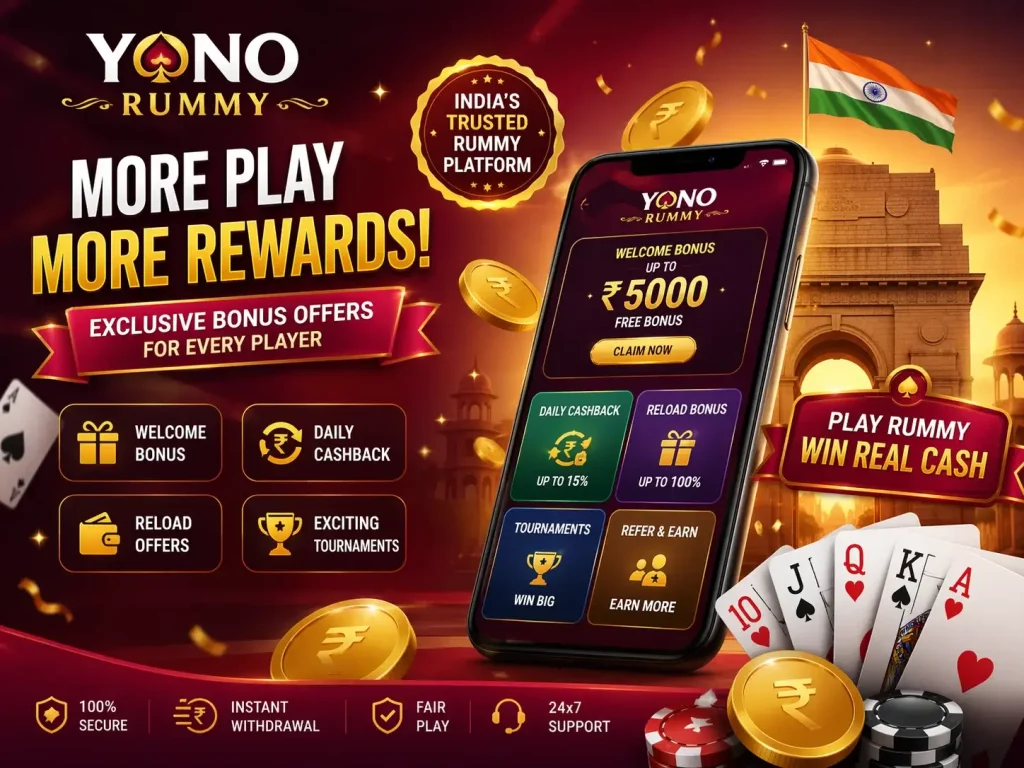
The logic behind these offers is based on tiered progression. Each stage introduces new conditions, wagering requirements, and unlockable benefits. These tiers are designed to gradually increase engagement while maintaining a balance between accessibility and challenge. Unlike traditional platforms, Yono Rummy emphasizes clarity in its bonus breakdown, ensuring that all conditions are transparent.
To better understand how these welcome offers are distributed, the following table outlines a typical structure.
| Stage | Deposit | Bonus Value | Unlock Condition |
|---|---|---|---|
| Welcome Level 1 | ₹500 | ₹500 | Play 3 games |
| Welcome Level 2 | ₹1000 | ₹1200 | Play 7 games |
| Welcome Level 3 | ₹2000 | ₹2600 | Play 15 games |
| Welcome Level 4 | ₹5000 | ₹7000 | Play 30 games |
This tier-based model reflects how Yono Rummy structures progression. Each level introduces higher potential rewards but also requires increased activity to unlock them. This creates a dynamic flow where users can choose how deeply they want to engage with the system.
In addition to structured welcome offers, the platform integrates dynamic rewards based on gameplay patterns. These rewards adapt over time and can vary depending on user activity. For example, consistent participation in specific game formats may unlock temporary incentives or cashback-style returns.
The following chart illustrates how different types of bonuses are distributed across the platform ecosystem.
This distribution highlights the importance of welcome incentives while also showcasing the presence of ongoing promotional systems. Cashback and reload offers play a significant role in maintaining balance across the platform, ensuring that users have access to multiple types of value.
Another important factor is the differentiation between fixed and flexible rewards. Fixed rewards follow a predefined structure, as shown in the earlier table, while flexible rewards adjust based on activity and time-based conditions. This dual system allows the platform to cater to both new and returning users without creating unnecessary complexity.
To further explore how different bonus types compare, consider the following breakdown.
| Bonus Type | Availability | Flexibility | Typical Value |
|---|---|---|---|
| Welcome Bonus | New Users | Low | High |
| Cashback | All Users | High | Medium |
| Reload Bonus | Returning Users | Medium | Medium |
| Tournament Rewards | Event-Based | Variable | High |
This comparison provides a clearer understanding of how each type of offer fits within the broader system. It also shows that not all rewards are equal in structure or purpose, reinforcing the importance of selecting the right offer based on individual preferences.
In conclusion, the bonus ecosystem on Yono Rummy is built around clarity, scalability, and adaptability. From structured welcome packages to dynamic ongoing rewards, the platform ensures that users have access to a wide range of incentives without overwhelming complexity.
Reload Bonuses and Cashback Mechanics
After the initial onboarding phase, Yono Rummy transitions users into a more dynamic reward system centered around reload offers and cashback mechanics. These incentives are structured to provide ongoing value rather than relying on one-time promotions. Instead of fixed packages, reload bonuses operate on recurring cycles that are often tied to deposit behavior and gameplay frequency.
Reload offers usually appear as percentage-based matches on repeat deposits. Unlike welcome structures, these bonuses are more flexible and may vary depending on timing, activity level, or internal promotional cycles. This creates a system where users can engage consistently without depending on limited-time offers.
Cashback introduces a different layer within the reward system. Rather than focusing on deposits, cashback returns a portion of net losses under specific conditions. These returns are calculated over defined periods such as daily or weekly intervals, making them predictable and easy to track.
To better understand how reload offers scale, the following table outlines a typical structure.
| Tier | Deposit Range | Reload % | Max Bonus |
|---|---|---|---|
| Basic | ₹200 – ₹999 | 40% | ₹400 |
| Standard | ₹1000 – ₹2999 | 60% | ₹1800 |
| Advanced | ₹3000 – ₹6999 | 75% | ₹5000 |
| High Tier | ₹7000+ | 100% | ₹10000 |
This tier-based structure shows how reload offers scale proportionally with deposit size. Higher tiers unlock increased percentages and larger caps, allowing more flexibility for users with different activity levels.
Cashback follows a separate model focused on loss recovery within a defined timeframe. Instead of immediate rewards, cashback is credited after calculations are completed for the selected period.
| Period | Loss Range | Cashback % | Crediting Time |
|---|---|---|---|
| Daily | ₹100 – ₹1000 | 5% | Next Day |
| Weekly | ₹1000 – ₹5000 | 10% | Weekly Cycle |
| Premium | ₹5000+ | 15% | Instant |
This structure ensures balanced distribution across different levels of activity. Lower ranges receive smaller but consistent returns, while higher ranges unlock stronger percentages.
To better visualize how reload bonuses and cashback compare within the system, the following chart highlights their overall contribution.
This comparison shows that reload bonuses remain the dominant recurring incentive, while cashback functions as a stabilizing component within the system.
Another important difference lies in activation timing. Reload bonuses are triggered instantly after a qualifying deposit, while cashback is processed after a defined calculation period. This distinction influences how each system is used and how rewards are accumulated.
In some cases, hybrid structures may appear, combining both reload and cashback elements. These formats create layered rewards that respond to both deposits and gameplay outcomes.
Overall, reload bonuses and cashback mechanics form a continuous reward loop within Yono Rummy, ensuring that users always have access to structured incentives beyond the initial stage.
Tournament Bonuses and Time-Limited Promotions
As users continue engaging with Yono Rummy, the reward system expands beyond static offers into more dynamic formats such as tournament bonuses and time-limited promotions. These incentives are structured around participation rather than just deposits, making them an important part of the overall ecosystem. Unlike fixed rewards, tournament-based bonuses depend on performance, ranking, and activity within specific events.
Tournaments are typically organized in cycles, ranging from short daily contests to larger weekly or seasonal events. Each format introduces a different reward pool, entry condition, and progression system. This creates a layered environment where users can choose between quick participation or longer competitive runs.
A key characteristic of tournament bonuses is their variability. Instead of fixed payouts, rewards are distributed based on leaderboard positions or milestone achievements. This introduces a competitive dimension that differs significantly from standard reward structures.
To better understand how tournament rewards are distributed, the following table outlines a typical payout structure.
| Rank | Reward Type | Reward Value | Entry Requirement |
|---|---|---|---|
| 🥇 1st Place | Cash + Bonus | ₹10,000 | Entry Fee ₹500 |
| 🥈 2nd – 5th | Cash | ₹5,000 | Entry Fee ₹500 |
| 6th – 20th | Bonus Credits | ₹1,000 | Entry Fee ₹500 |
| Participation | Small Bonus | ₹100 | Entry Fee ₹500 |
This structure highlights how rewards are concentrated at the top while still providing smaller incentives for broader participation. It ensures that both competitive and casual users can benefit from tournament engagement.
In addition to ranking-based rewards, Yono Rummy frequently introduces milestone-driven promotions. These are triggered when users reach specific gameplay thresholds within a limited timeframe. Examples include completing a set number of games, achieving a win streak, or reaching a points target.
These time-limited promotions add urgency and variety to the platform. They are often aligned with seasonal campaigns, special events, or platform-wide updates. Because of their temporary nature, they encourage users to engage within a defined window without relying on long-term commitments.
To illustrate how different promotional types contribute to overall activity, the following chart shows their distribution.
The chart demonstrates how participation tends to increase over time, especially when promotions are active. This reflects how time-limited incentives influence engagement patterns.
Another important aspect is the diversity of tournament formats. Some events are designed for quick sessions, while others require sustained participation over longer periods. This diversity allows users to select formats that match their availability and preferred pace.
| Tournament Type | Duration | Reward Pool | Complexity |
|---|---|---|---|
| Daily Sprint | 1 Day | Low | Simple |
| Weekly League | 7 Days | Medium | Moderate |
| Seasonal Event | 30 Days | High | Advanced |
These formats ensure that the platform remains varied and adaptable. Users are not restricted to a single type of engagement but can explore multiple paths depending on their goals.
Beyond structured tournaments, flash promotions also play a significant role. These short-term offers may appear without long notice and often include boosted rewards, reduced entry fees, or special multipliers. Their unpredictability adds another layer of variety to the system.
Overall, tournament bonuses and time-limited promotions represent the most dynamic segment of the Yono Rummy reward structure. They shift the focus from static incentives to performance-driven and time-sensitive opportunities, creating a constantly evolving environment.
Tournament Bonuses and Time-Limited Promotions
As users continue engaging with Yono Rummy, the reward system expands beyond static offers into more dynamic formats such as tournament bonuses and time-limited promotions. These incentives are structured around participation rather than just deposits, making them an important part of the overall ecosystem. Unlike fixed rewards, tournament-based bonuses depend on performance, ranking, and activity within specific events.
Tournaments are typically organized in cycles, ranging from short daily contests to larger weekly or seasonal events. Each format introduces a different reward pool, entry condition, and progression system. This creates a layered environment where users can choose between quick participation or longer competitive runs.
A key characteristic of tournament bonuses is their variability. Instead of fixed payouts, rewards are distributed based on leaderboard positions or milestone achievements. This introduces a competitive dimension that differs significantly from standard reward structures.
To better understand how tournament rewards are distributed, the following table outlines a typical payout structure.
| Rank | Reward Type | Reward Value | Entry Requirement |
|---|---|---|---|
| 1st Place | Cash + Credits | ₹10,000 | Entry Fee ₹500 |
| 2nd – 5th | Cash | ₹5,000 | Entry Fee ₹500 |
| 6th – 20th | Credits | ₹1,000 | Entry Fee ₹500 |
| Participation | Small Reward | ₹100 | Entry Fee ₹500 |
This structure highlights how rewards are concentrated at the top while still providing smaller incentives for broader participation. It ensures that both competitive and casual users can benefit from tournament engagement.
In addition to ranking-based rewards, Yono Rummy frequently introduces milestone-driven promotions. These are triggered when users reach specific gameplay thresholds within a limited timeframe. Examples include completing a set number of matches, achieving consecutive wins, or reaching cumulative score targets across multiple sessions.
These mechanics are particularly important because they create a sense of progression that is independent of leaderboard ranking. Even without finishing in top positions, users can still unlock rewards through consistent activity. This adds a secondary reward layer that complements the main tournament structure.
To illustrate how different promotional types contribute to overall activity, the following chart shows their distribution.
Participation growth over time reflects how these time-limited campaigns gradually build momentum. Early stages tend to have moderate engagement, while later stages show increased activity as users approach reward thresholds or leaderboard deadlines.
Another important factor is the segmentation of tournament events. Not all users participate under the same conditions. Some tournaments are designed for low-entry participation, while others target higher-value players with larger reward pools and more complex structures.
| Tournament Type | Duration | Reward Pool | Complexity |
|---|---|---|---|
| Quick Play | Few Hours | Low | Simple |
| Daily Event | 1 Day | Medium | Moderate |
| Weekly League | 7 Days | High | Advanced |
This segmentation allows the platform to maintain diversity in event formats while ensuring accessibility across different engagement levels.
Additionally, time-limited promotions often include layered mechanics such as multipliers, streak rewards, and progressive unlocks. These elements operate alongside the main tournament structure, creating multiple reward pathways within the same event. For example, a user might earn a base reward for placement while also unlocking additional value through streak-based achievements.
Flash events further enhance this ecosystem. These short-duration campaigns may introduce temporary boosts, reduced entry requirements, or increased reward pools. Their unpredictable timing adds variation and prevents the system from becoming repetitive.
Another notable aspect is the integration of cross-mode incentives. While Yono Rummy primarily focuses on card-based gameplay, certain promotional structures may reference mechanics inspired by other gaming categories such as Slots, particularly in terms of randomness and reward bursts. This crossover approach adds variety without altering the core gameplay experience.
From an access perspective, tournaments are usually available immediately after account entry, without requiring additional verification steps beyond the initial login. This ensures that users can participate in events without unnecessary delays, maintaining a smooth transition between gameplay and reward opportunities.
Overall, tournament bonuses and time-limited promotions represent the most dynamic segment of the Yono Rummy reward ecosystem. They introduce variability, competition, and layered progression, making them a central component of the platform’s long-term structure.
Special Offers, Reward Systems and Final Bonus Structure
At the final stage of the Yono Rummy reward ecosystem, users encounter a combination of special offers, structured reward systems, and long-term incentive logic. Unlike earlier stages that focus on onboarding or recurring deposits, this layer is designed to connect all bonus mechanics into a unified flow. It reflects how different reward types interact rather than existing independently.
Special offers are usually triggered by specific conditions rather than fixed schedules. These conditions may include gameplay milestones, seasonal campaigns, or internal platform events. Because of this, these offers often feel more personalized compared to standard promotions. They can appear in multiple formats, such as instant rewards, multiplier boosts, or limited-time unlocks tied to activity.
One of the most important aspects of this stage is how rewards are combined. Instead of receiving isolated incentives, users interact with a system where different bonuses overlap. For example, a reload reward may work alongside a cashback return, while a tournament entry provides additional value through leaderboard rewards. This layered structure increases overall efficiency without adding unnecessary complexity.
To understand how these combined systems function, the following table outlines typical special offer types and their behavior.
| Offer Type | Trigger | Reward Format | Duration |
|---|---|---|---|
| Streak Bonus | Consecutive Games | Multiplier | Short-Term |
| Event Boost | Special Campaign | Extra Credits | Limited |
| Loyalty Reward | Long-Term Activity | Tier Unlock | Ongoing |
| Flash Offer | Random Trigger | Instant Bonus | Very Short |
This overview shows that special offers are less predictable but more diverse. They introduce variability into the system and ensure that users encounter new opportunities over time.
Another critical component is the reward system progression. Instead of isolated rewards, users often move through stages where each level unlocks additional benefits. This progression is typically based on activity metrics such as number of games played, deposit frequency, or participation in events.
| Level | Requirement | Unlocked Benefit | Impact |
|---|---|---|---|
| Level 1 | Entry | Basic Rewards | Low |
| Level 2 | 10 Games | Reload Boost | Medium |
| Level 3 | 25 Games | Cashback Increase | High |
| Level 4 | 50+ Games | Exclusive Offers | Very High |
This progression model ensures that rewards scale alongside activity. As users move through levels, they unlock more efficient bonuses, which integrate with previously discussed systems such as reloads and tournaments.
To visualize how all bonus categories combine within the platform, the following chart provides a complete distribution.
This distribution highlights how no single system dominates entirely. Instead, all components contribute to a balanced structure where different types of rewards support each other.
An additional aspect worth noting is accessibility. Special offers and advanced rewards are typically available through multiple entry points, including the main platform interface and the mobile app. This ensures that users can access the full reward system regardless of their preferred device.
Another important factor is timing. While some rewards are always available, others depend on specific windows. Understanding when these offers appear can significantly influence how effectively they are used. Time-based availability adds another layer of structure without making the system overly complex.
In conclusion, the final stage of the Yono Rummy bonus ecosystem brings together all previously introduced mechanics into a cohesive system. It combines flexibility, progression, and variability, ensuring that users have access to a wide range of incentives at any stage of their activity.






Comments