
Book of Dead Slot Experience on Yono Rummy
Book of Dead on Yono Rummy delivers a structured and immersive slot-style experience built around exploration, symbols, and expanding feature mechanics. The game stands out because it combines a simple spin-based system with deeper layers that reveal themselves over time. While the initial gameplay feels straightforward, longer sessions introduce patterns, expanding symbols, and feature-triggered sequences that create a more engaging flow.
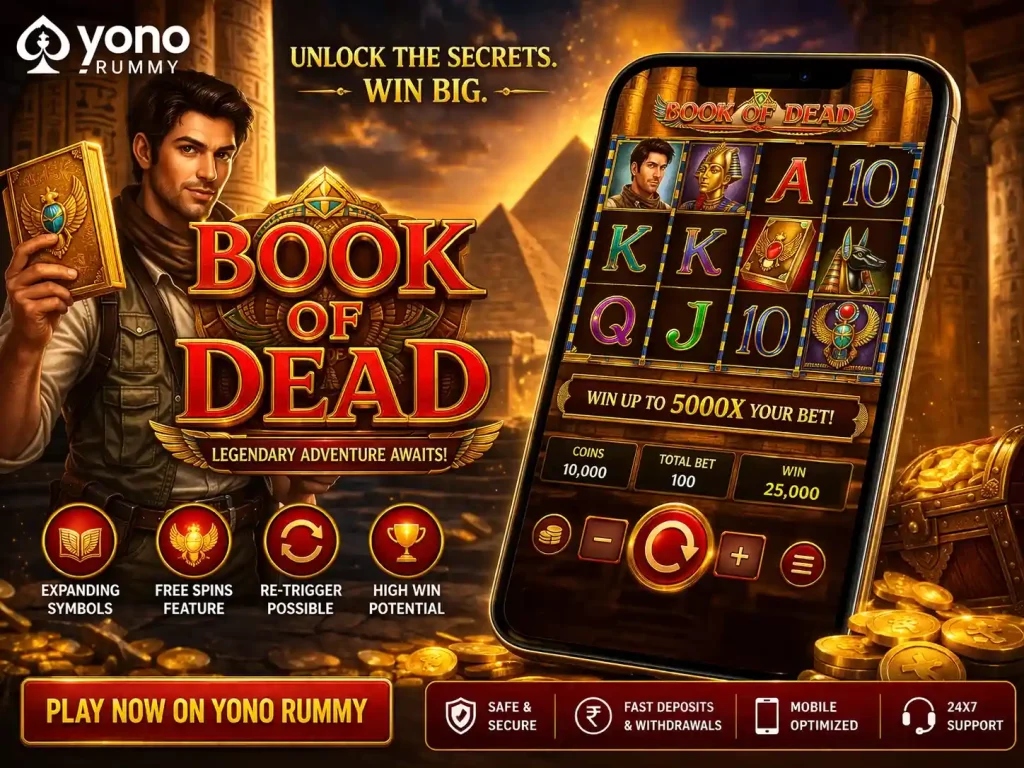
The Egyptian-inspired theme gives the game a distinct identity. Symbols such as explorers, ancient artifacts, and temple elements are presented in a clean and readable style, ensuring that even during fast spins, everything remains easy to follow. This clarity is important for maintaining focus, especially on mobile devices where screen space is limited.
Accessing Book of Dead on Yono Rummy is quick and seamless. Players can start instantly after sign up, and the game loads smoothly whether accessed via browser or mobile apk. This flexibility ensures that sessions remain uninterrupted and consistent across different devices.
Core Gameplay Mechanics and Symbol Structure
Book of Dead uses a classic reel-based system enhanced by feature mechanics that extend beyond basic spins. The structure revolves around symbol alignment, feature triggers, and expanding icons that increase interaction during key moments.
These mechanics combine to create a system where each spin has the potential to shift into a feature-driven sequence. The expanding symbol mechanic is especially important because it transforms regular spins into more visually active events.
Session Flow and Gameplay Progression
Book of Dead sessions typically begin with quick spins that establish a steady rhythm. As the session continues, players encounter feature triggers that introduce expanding symbols and extended sequences. This progression adds depth without changing the core rules.
This progression reflects how gameplay shifts from simple spins to more layered sequences when features activate.
Visual Theme and Symbol Design
The Egyptian theme plays a significant role in shaping the experience. Symbols are designed to be recognizable and visually distinct, ensuring that players can quickly identify important elements. The use of gold tones combined with darker backgrounds creates contrast, helping symbols stand out clearly.
Animations are focused on key events. Expanding symbols, feature triggers, and reel movements are highlighted with smooth transitions that keep the player engaged without overwhelming the screen. This balance between motion and clarity supports longer sessions.
Platform Integration on Yono Rummy
Book of Dead fits seamlessly within Yono Rummy’s platform structure. Navigation remains consistent, allowing players to switch between different games without adjusting to new interfaces. This familiarity enhances usability and encourages exploration.
The game’s accessibility across devices ensures that players can continue sessions without interruption. Whether using a browser or mobile device, performance remains stable and responsive.
Gameplay Rhythm and Feature Balance
The pacing of Book of Dead is structured around alternating periods of base spins and feature-driven moments. Regular spins maintain steady interaction, while feature triggers introduce bursts of activity through expanding symbols.
The presence of a bonus system ensures that sessions include moments of increased intensity. These events break the regular flow and create peaks of engagement without disrupting overall balance.
Accessibility and Control Simplicity
Controls in Book of Dead are minimal and intuitive. Players primarily interact through the spin function, with optional features like auto-play enhancing convenience. This simplicity allows both new and experienced users to engage with the game easily.
The layout adapts to different screen sizes, maintaining readability and usability. This is particularly important for mobile users who rely on touch-based interaction.
Session Variety and Replay Value
Book of Dead maintains replay value through variation in symbol combinations and feature triggers. While the core mechanics remain consistent, each session unfolds differently depending on how features activate.
The integration of Slots mechanics within Yono Rummy expands the platform’s range, offering players a different style of gameplay alongside other options.
Interaction Simplicity and Flow
The game’s structure ensures that players can focus entirely on the gameplay without needing to manage complex systems. Each spin leads naturally into the next, creating a continuous flow that keeps sessions engaging.
The combination of clear visuals, balanced pacing, and accessible controls makes Book of Dead a strong addition to the Yono Rummy platform, providing a structured yet dynamic experience for players exploring slot-style games.
Book of Dead Features and Expanding Symbol Mechanics
Book of Dead on Yono Rummy builds its depth around a simple foundation and one defining mechanic: expanding symbols during feature rounds. While the base gameplay feels straightforward, the real identity of the game becomes clear once feature triggers activate. These moments transform the pace of play and introduce a different level of engagement that keeps sessions interesting over time.
At its core, the game revolves around spinning reels and matching symbols. This basic structure ensures that new players can immediately understand how to interact with the system. However, what makes Book of Dead stand out is how it uses special mechanics to extend beyond standard spins. Expanding symbols can fill entire reels, creating visually striking sequences that change how results appear and how players perceive each round.
The transition from base spins to feature-driven gameplay is smooth. There is no sudden complexity or confusing steps. Instead, the game gradually introduces these elements as part of its natural rhythm. This approach keeps the experience accessible while still offering enough variation to maintain attention during longer sessions.
Feature Phase Dynamics
The feature phase is where Book of Dead becomes more engaging. When free spins activate, one symbol is selected as a special expanding icon. This symbol can stretch across reels, potentially creating strong visual sequences that differ from regular spins.
The unpredictability of this selection adds interest to each feature round. Players do not know which symbol will be chosen, and this uncertainty creates anticipation. Some feature rounds may feel quieter, while others produce more noticeable sequences due to how symbols align.
This variation is key to maintaining replay value. Even though the rules remain the same, the outcome of each feature round feels different. The expanding symbol mechanic ensures that the game does not become repetitive, even during extended play.
Session Structure and Engagement Patterns
Book of Dead sessions typically follow a pattern where base spins build toward feature activation. Once triggered, the pace shifts, and the player experiences a more active phase with expanding symbols and additional spins. Afterward, the game returns to its regular rhythm.
This distribution highlights how feature moments act as peaks within the session while base spins maintain overall flow.
Visual Clarity and Symbol Recognition
The design of Book of Dead focuses on clarity. Symbols are large and distinct, making it easy to recognize them even during fast spins. This is especially useful on mobile devices, where screen space is limited.
The expanding symbol mechanic is also visually clear. When it activates, the effect is easy to follow, helping players understand how outcomes are formed. This transparency supports engagement because players can see exactly what is happening.
The use of contrast between symbols and background ensures that important elements stand out. This balance between detail and readability is one of the reasons the game remains comfortable during longer sessions.
Platform Performance and Accessibility
On Yono Rummy, Book of Dead performs consistently across different devices. Whether accessed through browser or mobile apk, the game maintains smooth transitions and stable loading times.
The interface adapts to screen size, ensuring that controls remain accessible and symbols remain visible. This adaptability is important for players who switch between devices or prefer mobile gameplay.
The consistent layout also supports repeat sessions. Players can return at any time and immediately understand how to interact with the game.
Gameplay Rhythm and Attention
The rhythm of Book of Dead is defined by the contrast between base spins and feature phases. Regular spins provide a steady pace, while feature rounds introduce bursts of activity. This contrast keeps the experience balanced and prevents monotony.
The bonus feature system plays a central role in this rhythm. It creates moments where the player becomes more focused, watching how expanding symbols interact with the reels.
This balance between calm and active phases helps maintain engagement without overwhelming the player.
Replay Value and Session Variety
Replay value comes from the variation in feature outcomes. Each time the feature activates, a different symbol may be selected, leading to different sequences. This unpredictability ensures that sessions do not feel identical.
Players can return to the game without needing to learn new rules. The familiar structure combined with changing outcomes creates a consistent yet varied experience.
Within Yono Rummy, this makes Book of Dead a reliable option for players looking for a structured but dynamic slot-style game.
Interaction Simplicity and Flow
The control system remains minimal throughout. Players interact primarily through spinning, with optional features like auto-play enhancing convenience. This simplicity ensures that the focus stays on gameplay rather than controls.
The inclusion of Slots mechanics ensures that the experience feels familiar while still offering enough variation to remain engaging.
Book of Dead Mobile Experience and Performance
Book of Dead on Yono Rummy continues to maintain a strong presence on mobile devices, where performance, clarity, and responsiveness are essential. The game is optimized to deliver smooth gameplay regardless of device type, allowing players to move between desktop and mobile without losing consistency. This flexibility is particularly important for users in India, where mobile access is often the primary way to engage with games.
The interface is structured to keep everything within easy reach. Buttons are clearly positioned, and essential information such as balance, spin control, and feature indicators are displayed without clutter. This ensures that players can focus on the gameplay itself rather than searching for controls or adjusting settings.
The loading speed also contributes to the overall experience. Book of Dead starts quickly, allowing players to begin sessions without delays. This is especially useful for short sessions where quick access is important.
Device Usage Patterns
Book of Dead is widely played across different devices, but mobile usage dominates due to its accessibility and convenience. Players often prefer quick sessions that fit into their daily routine, making smartphones the primary platform.
This distribution shows how important mobile optimization is for maintaining engagement and accessibility.
Control Simplicity and Flow
Book of Dead keeps its control system minimal, allowing players to focus on the gameplay itself. The main interaction is the spin function, while additional options like auto-play provide convenience for longer sessions.
This simplicity reduces the learning curve and makes the game accessible to a wide audience. Players do not need to manage complex settings or remember multiple controls.
The consistent layout also ensures that players can switch between sessions without confusion. This is particularly useful for mobile users who may play in short intervals.
Visual Clarity and Symbol Design
Visual clarity is one of the strongest aspects of Book of Dead. Symbols are designed to be easily recognizable, and expanding icons are clearly highlighted during feature rounds. This makes it easier for players to follow what is happening, even during fast sequences.
The contrast between symbols and background ensures that important elements stand out. This helps maintain focus and reduces visual fatigue during longer sessions.
Animations are smooth and purposeful, emphasizing key events without overwhelming the screen.
Session Continuity and Flexibility
Book of Dead supports flexible session lengths. Players can start and stop without losing context, making it suitable for both short and extended play. This flexibility is important for maintaining engagement across different play styles.
The ability to resume sessions easily also contributes to replay value. Players can return at any time and continue without needing to reconfigure settings.
Platform Integration on Yono Rummy
Within Yono Rummy, Book of Dead maintains consistency with the platform’s overall design. Navigation remains intuitive, and players can switch between different games without adjusting to new interfaces.
This integration enhances usability and encourages exploration. Players can move between different experiences while maintaining familiarity.
Replay Value and Engagement
Replay value in Book of Dead comes from the variation in feature outcomes. Each session can produce different sequences depending on how features activate and which symbols expand.
This unpredictability keeps the experience fresh while maintaining a consistent structure. Players can return to the game without needing to learn new mechanics.
Responsible Gameplay Approach
Because Book of Dead offers fast-paced interaction, it is important for players to maintain a balanced approach. Sessions can move quickly, so taking breaks and managing time helps preserve enjoyment.
The game is designed for entertainment, and its strength lies in its smooth flow and clear visuals. By focusing on the experience rather than outcomes, players can enjoy the game more fully.
Book of Dead continues to function as a flexible and accessible part of the Yono Rummy platform, offering a mobile-friendly experience that combines clarity, performance, and engaging gameplay.
Book of Dead Session Strategy and Gameplay Awareness
Book of Dead on Yono Rummy maintains its long-term appeal by allowing players to naturally adjust their approach without introducing complex systems. The game remains simple in structure, but over time, players begin to recognize how different elements influence the flow of each session. This creates a subtle sense of strategy, not through rules, but through observation and experience.
At the beginning of a session, gameplay usually feels fast and straightforward. Players spin, observe results, and continue without needing to think about patterns. As sessions extend, attention shifts toward how feature triggers appear and how expanding symbols influence outcomes. This transition happens naturally and does not require active learning. The player simply becomes more aware of the game’s rhythm.
This awareness changes how sessions feel. Instead of focusing only on individual spins, players begin to notice sequences. A series of base spins may lead into a feature phase, and that phase may produce expanding symbols that transform the round. These layered interactions make the game feel more dynamic while keeping the mechanics accessible.
Session Rhythm and Attention Patterns
The rhythm of Book of Dead is built around alternating phases of calm and activity. Base spins create a steady flow, while feature rounds introduce bursts of movement through expanding symbols. This contrast keeps sessions engaging without becoming overwhelming.
Players often notice that attention increases during feature phases. These moments feel different because they break the regular pattern of spins. Expanding symbols create visual changes that draw focus, making the session feel more dynamic.
This structure shows how different phases contribute to the overall experience. Base spins dominate the session, while feature rounds provide variation and intensity.
Comfort and Long Session Play
Comfort plays a major role in maintaining engagement during extended sessions. Book of Dead supports this through a stable interface and smooth animations. Controls remain consistent, and the layout does not change, reducing the need for adjustment.
The pacing also helps maintain comfort. The game does not rush the player, allowing time to observe each outcome. This balance between speed and clarity prevents fatigue and keeps the experience enjoyable over time.
Replay Value and Consistency
Replay value in Book of Dead comes from the combination of consistent structure and varied outcomes. Players know what to expect in terms of gameplay, but each session produces different sequences depending on feature triggers and symbol alignment.
This balance ensures that the game remains familiar without becoming repetitive. Players can return at any time and immediately understand how to interact with the system.
Platform Role on Yono Rummy
Within Yono Rummy, Book of Dead functions as a stable and recognizable slot-style option. It complements other games by offering a different type of interaction while maintaining the same level of accessibility.
Players can switch between experiences without needing to adjust to new interfaces. This consistency improves usability and encourages exploration across the platform.
Responsible Session Awareness
Because Book of Dead moves at a steady pace, it is easy to continue playing without noticing time passing. Maintaining awareness of session length helps keep the experience enjoyable. Taking breaks and setting limits can improve overall comfort.
The game is designed for entertainment, and its strength lies in its smooth flow and clear visual structure. By focusing on the experience rather than outcomes, players can enjoy each session more fully.
Book of Dead remains a balanced and engaging part of the Yono Rummy platform, offering a clear, structured, and visually consistent gameplay experience for players across different devices.






Comments