Welcome Bonus Structure in Yono Rummy
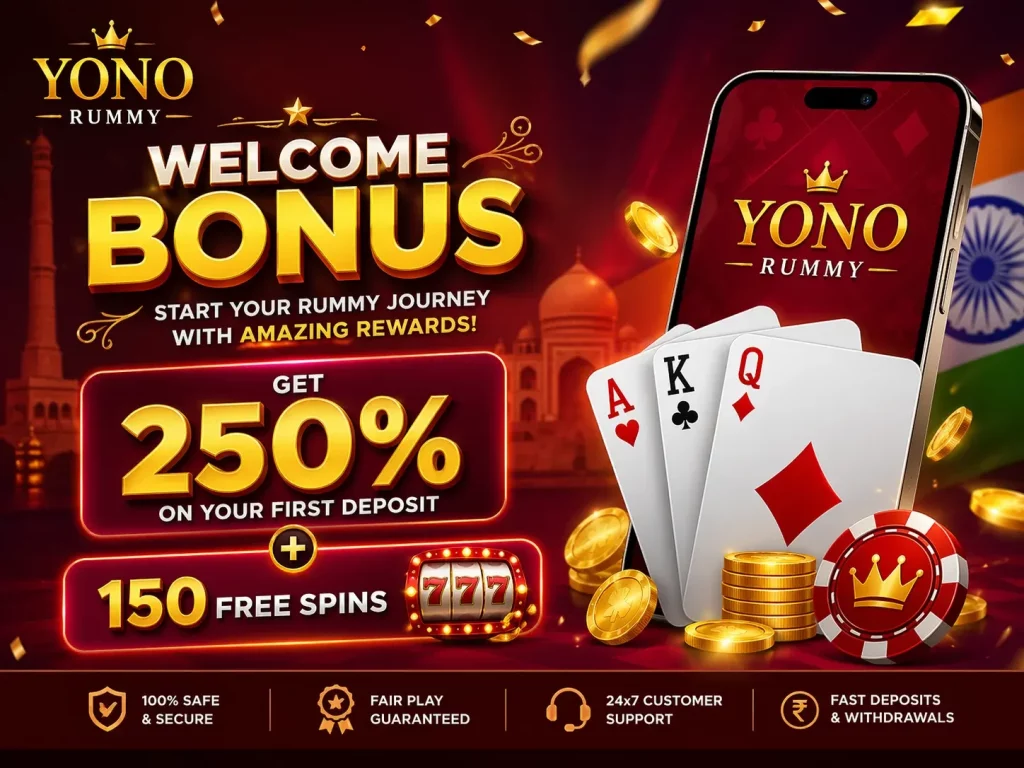
The Welcome Bonus in Yono Rummy is designed as a multi-stage reward system rather than a single one-time offer. This approach allows new users to gradually unlock benefits while gaining a deeper understanding of how the platform works.
Instead of receiving a fixed amount immediately, players move through structured levels, each with its own requirements and rewards. This creates a more controlled and balanced introduction to the gameplay environment.
After completing the login, users gain access to the first stage of the reward system. From that point onward, progression depends on activity and engagement within the platform.
How the Welcome Bonus Works
The system is built to encourage interaction rather than passive claiming of rewards. Each stage unlocks only after specific conditions are met, ensuring that users actively participate in games.
Key mechanics include:
- multiple bonus levels
- progressive reward scaling
- activity-based unlocking
- increasing value at each stage
This structure provides a clear path for users while maintaining a steady reward flow.
| Stage | Deposit | Bonus Value | Unlock Condition |
|---|---|---|---|
| Level 1 | ₹500 | ₹500 | Play 3 games |
| Level 2 | ₹1000 | ₹1200 | Play 7 games |
| Level 3 | ₹2000 | ₹2600 | Play 15 games |
| Level 4 | ₹5000 | ₹7000 | Play 30 games |
Why This Structure Matters
A staged reward system provides better control over how bonuses are distributed and used. Instead of overwhelming users with a large amount at once, it introduces rewards progressively.
This creates several advantages:
- easier onboarding for new players
- balanced gameplay experience
- reduced risk of misuse
- clearer progression path
Many users transitioning from other gaming formats like Slots find this system more structured and predictable, especially during the first sessions.
Bonus Distribution Across Levels
To better understand how rewards are spread across stages, the following chart illustrates the proportional allocation of the Welcome Bonus.
Practical Meaning for Players
The chart shows that higher levels carry a larger portion of the total reward. This is intentional, as users gain more experience and confidence as they progress.
Early stages serve as an introduction, while later stages provide higher-value opportunities.
Additionally, the availability of the platform through a mobile app allows users to complete bonus stages anytime, making progression more flexible and convenient.
Types of Welcome Bonus Rewards in Yono Rummy
The Welcome Bonus system in Yono Rummy is not limited to a single reward format. Instead, it combines several types of incentives that work together to create a more flexible and layered experience.
Each reward type serves a different purpose. Some are designed to provide immediate value, while others focus on long-term engagement and gradual progression through the platform.
Understanding these reward categories is essential for navigating the system effectively and maximizing the value received during the onboarding phase.
Core Bonus Types Explained
The platform uses a mix of reward formats that align with different user behaviors. These can be divided into several main categories.
- welcome rewards for first-time deposits
- cashback-based compensation
- reload incentives for returning activity
- tournament-based prizes
Each type interacts with the overall bonus system differently, contributing to the total structure rather than functioning in isolation.
| Bonus Type | Availability | Flexibility | Typical Value |
|---|---|---|---|
| Welcome Bonus | New Users | Low | High |
| Cashback | All Users | High | Medium |
| Reload Bonus | Returning Users | Medium | Medium |
| Tournament Rewards | Event-Based | Variable | High |
Differences Between Reward Types
Each bonus type has a distinct role in the overall system. Welcome rewards provide the highest value upfront but are typically limited in flexibility. Cashback, on the other hand, offers more adaptability and is available across different stages of usage.
Reload bonuses act as a bridge between early and ongoing engagement. They maintain continuity after the initial welcome phase ends.
Tournament rewards introduce a competitive element, where outcomes depend not only on participation but also on performance relative to other players.
How Rewards Are Distributed
To better understand the relationship between these bonus types, the following chart illustrates how they are proportionally represented within the overall system.
Extended View on Reward Progression
As users move beyond the initial onboarding phase, the reward system begins to show its full depth. Each component becomes more interconnected, and the overall structure starts to feel less like separate features and more like a unified ecosystem.
Progression is not strictly linear. While early stages follow a clear path, later rewards depend more on user behavior, activity frequency, and participation in different formats. This creates a more adaptive experience where outcomes vary from user to user.
The longer a user interacts with the system, the more noticeable these differences become. Some may focus on consistency and benefit from recurring rewards, while others may prioritize higher-value opportunities tied to performance-based events.
Long-Term Engagement Structure
Over time, the system transitions into a rhythm where rewards are no longer tied to specific milestones but instead become part of a continuous cycle.
This cycle includes:
- recurring cashback periods
- regular deposit-based incentives
- event-driven rewards
- seasonal variations
Such a structure allows the platform to maintain consistency while still introducing variation through different reward formats.
Unlike static systems, this model evolves naturally as user behavior changes. It adapts to both casual and more active usage patterns without requiring major adjustments from the user side.
Interaction Between Reward Layers
One of the most important aspects of the system is how different reward layers interact with each other. Rather than functioning independently, they overlap and influence the overall experience.
For instance, participation in events can indirectly increase the effectiveness of other rewards. Similarly, consistent activity can improve the value gained from recurring systems.
This interconnected design ensures that no single feature operates in isolation. Instead, the entire system works as a combined structure where each element contributes to the overall result.
Structural Balance of the System
A well-balanced reward system needs to manage expectations while still providing value. If rewards are too concentrated in one area, the system becomes predictable. If they are too scattered, it becomes difficult to understand.
In this case, the distribution appears evenly spread across multiple components. This prevents over-reliance on any single reward type and maintains a steady flow of incentives.
The balance between immediate and long-term rewards is especially important. It ensures that users receive value early on while still having reasons to continue interacting with the platform over time.
Reward Optimization Perspective
Understanding how to navigate the system effectively requires recognizing the balance between different reward types. No single element dominates the structure entirely, and each one serves a specific function.
For example, immediate rewards tend to have lower flexibility, while ongoing rewards offer more adaptability but require sustained activity. This balance ensures that users are not limited to one approach and can adjust their strategy over time.
It is also important to consider timing. Some rewards are more effective when used early, while others become more valuable as activity increases. This creates a layered progression where decisions made at one stage can influence outcomes later.
Practical Use Cases
Different users will interact with these rewards in different ways depending on their playstyle and goals.
For example:
- users focused on quick gains may prioritize welcome rewards
- users who play regularly may benefit more from cashback
- competitive players may focus on tournaments
This flexibility ensures that the system adapts to various usage patterns rather than forcing a single approach.
Role of Bonus in the Overall Experience
The bonus system acts as a structured layer on top of the core gameplay. It does not replace the main experience but enhances it by introducing additional incentives.
Unlike a single static reward, this approach allows continuous interaction with the system, making each session slightly different depending on the stage and activity level.
Cashback and Reload Mechanics in Yono Rummy
After completing the initial welcome stages, the system transitions into a more dynamic reward structure based on ongoing activity. At this point, cashback and reload offers become the primary sources of value.
These mechanics are designed to operate continuously, unlike the welcome rewards which are limited to early stages. They create a recurring cycle where users receive incentives based on their gameplay patterns and deposit behavior.
This shift marks an important transition from onboarding to sustained interaction with the platform.
Understanding Cashback Logic
Cashback works as a compensation mechanism. Instead of focusing only on wins, it accounts for losses within a defined period and returns a percentage back to the user.
This approach introduces a level of balance into the system, especially for players who engage frequently. The percentage of cashback typically depends on activity levels and can vary across different tiers.
Key characteristics of cashback:
- calculated over a specific time frame
- based on net losses rather than total bets
- credited automatically after the cycle ends
- scales with activity
This makes it one of the most consistent reward types in the system.
| Period | Loss Range | Cashback % | Crediting Time |
|---|---|---|---|
| Daily | ₹100 – ₹1000 | 5% | Next Day |
| Weekly | ₹1000 – ₹5000 | 10% | Weekly Cycle |
| Premium | ₹5000+ | 15% | Instant |
Reload Bonuses Explained
Reload bonuses complement cashback by providing additional value during deposits. Unlike cashback, which is reactive, reload bonuses are proactive incentives.
They are usually structured in tiers based on deposit size, allowing users to receive a percentage-based increase on their funds.
Key aspects:
- triggered during deposits
- percentage-based rewards
- often capped with a maximum value
- structured in multiple tiers
This creates a predictable system where users can estimate the reward before making a deposit.
| Tier | Deposit Range | Reload % | Max Bonus |
|---|---|---|---|
| Basic | ₹200 – ₹999 | 40% | ₹400 |
| Standard | ₹1000 – ₹2999 | 60% | ₹1800 |
| Advanced | ₹3000 – ₹6999 | 75% | ₹5000 |
| High Tier | ₹7000+ | 100% | ₹10000 |
How These Systems Work Together
Cashback and reload bonuses are designed to complement each other rather than compete. One responds to gameplay outcomes, while the other enhances deposits.
This creates a balanced system where:
- cashback reduces potential downside
- reload bonuses increase available funds
- both contribute to longer sessions
- users maintain consistent engagement
Over time, these mechanics become more relevant than the initial welcome rewards, as they define the long-term value structure.
Strategic Perspective
From a structural standpoint, the system evolves in three phases:
- initial onboarding through welcome rewards
- transition into reload-based incentives
- stabilization through cashback cycles
This layered progression ensures that the reward system remains active and relevant beyond the first sessions.
Tournament Rewards and Final Bonus System Overview
At the final stage of the Yono Rummy reward system, tournament-based incentives and combined bonus mechanics take a central role. Unlike fixed rewards such as cashback or reload bonuses, tournament rewards introduce variability and performance-based outcomes.
This makes them one of the most dynamic elements within the entire structure. Instead of receiving predefined values, users compete for a share of a prize pool, which can vary depending on participation levels and event type.
This layer adds a competitive dimension to the overall system and completes the full reward cycle.
How Tournament Rewards Work
Tournament rewards are structured around ranking positions. Players enter events with a fixed entry requirement and compete for a distributed prize pool.
The value received depends on final placement, meaning that outcomes are not guaranteed but are influenced by skill and consistency.
Key elements include:
- predefined entry requirements
- ranking-based payouts
- variable reward distribution
- limited-time events
This structure differs significantly from static rewards, as it introduces competition into the equation.
| Rank | Reward Type | Reward Value | Entry Requirement |
|---|---|---|---|
| 1st Place | Cash + Bonus | ₹10,000 | Entry Fee ₹500 |
| 2nd – 5th | Cash | ₹5,000 | Entry Fee ₹500 |
| 6th – 20th | Bonus Credits | ₹1,000 | Entry Fee ₹500 |
| Participation | Small Bonus | ₹100 | Entry Fee ₹500 |
Types of Tournaments Available
Tournaments vary depending on duration and scale. Some are designed for quick sessions, while others span multiple days and involve larger prize pools.
Each format serves a different purpose within the system and allows users to choose based on time and preference.
| Tournament Type | Duration | Reward Pool | Complexity |
|---|---|---|---|
| Daily Sprint | 1 Day | Low | Simple |
| Weekly League | 7 Days | Medium | Moderate |
| Seasonal Event | 30 Days | High | Advanced |
Full Bonus System Distribution
To understand how all reward types fit together, the following chart shows the overall distribution of the system.
Final Overview of the System
At this stage, the full reward structure becomes clear. The system is not based on a single mechanic but on a combination of interconnected elements.
Each component plays a role:
- welcome rewards initiate the experience
- reload bonuses extend value during deposits
- cashback stabilizes long-term interaction
- tournaments introduce competition
Together, these elements form a layered ecosystem that evolves with user activity.
Summary
The Yono Rummy bonus system is built around progression, flexibility, and variety. Instead of relying on one reward type, it integrates multiple systems into a unified structure.
This ensures that:
- rewards remain relevant over time
- users can interact with different formats
- the system adapts to different usage patterns
From a structural perspective, the reward system can be seen as a layered model with increasing complexity. The first layer introduces basic concepts, the second expands available options, and the final layers combine multiple mechanics into a cohesive system.
This gradual increase in complexity allows users to adapt naturally without being overwhelmed. At the same time, it provides enough depth to keep the system engaging over extended periods.






Comments